French songwriters and K-pop: the bridge almost nobody uses
France’s own music body says it plainly: French writing in K-pop is largely untapped. That is unusual: it is rare for a gap to be officially documented and still left open.
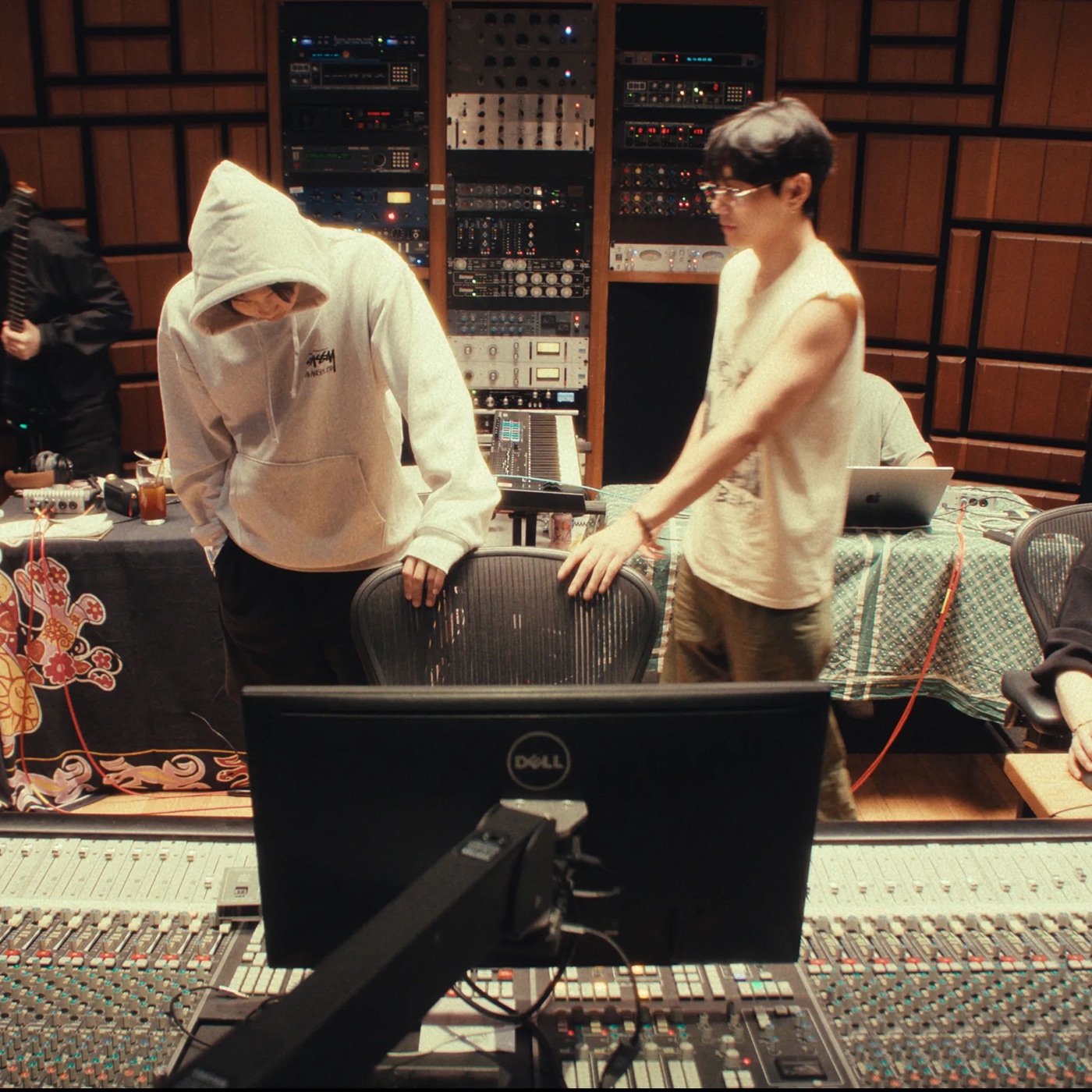
A French songwriter reaches a K-pop release almost exclusively through a song camp or through a publisher with an existing Korean relationship. Korean labels commission by brief, for a named act and a named window, and choose from what comes back. Being outside the room when the brief is given usually means not being considered at all.
The gap is documented, which is the strange part
Most market gaps are arguments. This one is a published statement. France’s Centre national de la musique, the public body that funds and structures the French music industry, writes that Korean labels and publishers routinely identify songwriters from the United States, the United Kingdom and Scandinavia, and much less frequently from France, and that French writing therefore represents a potential that remains largely untapped.
The CNM does not stop at the observation. Together with the French Embassy in Korea, LEEWAY Music & Media, JYP Entertainment and AMPLIFIED Corporation, it runs the Atelier K-Pop songwriting camp in Seoul: a handful of French writers, topliners and producers placed alongside a dozen Korean and international professionals, in JYP’s own studios. A second edition ran in June 2026.
Four writers per edition. That is the size of the official door.
Why the door is narrow, and it is not about talent
Around 80% of K-pop songs today integrate Western influences: melodic construction, production references, song architecture. The market is structurally open to foreign writers; it has been for fifteen years. Sweden built an entire export industry on exactly this opening.
So the constraint is not aesthetic. It is routing. A Korean A&R with a release to fill has a list of publishers they already call, and those publishers have writers they already trust. Nothing in that loop generates a reason to discover a French writer. The loop is not hostile, just closed, and closed loops stay closed unless something outside them opens.
How a K-pop cut actually happens
It starts with a brief, not with a song
This is the single biggest difference from how most French writers work. In K-pop the label decides that a specific act needs a specific kind of song for a specific comeback, and commissions many versions of it. The song exists because the slot exists.
Sending finished songs into that system rarely works. Not because they are bad, but because they answer a question nobody asked.
The demo is not in Korean
Demos are delivered in English, or in phonetic placeholder syllables. Korean lyricists rewrite the words afterwards, and they are credited for it. What you are selling is the melody, the topline and the production, not the words.
This is the fact that surprises most French writers, and it is the one that should encourage them: not speaking Korean is not a barrier. Not understanding what a comeback is, is.
Camps compress months into days
A song camp puts writers, topliners and producers in rotating teams, to a brief, for several days. In most Western markets a camp is a nice-to-have. In K-pop it is the sourcing method, which means the camp is not a networking opportunity attached to the work. It is the work.
Splits are agreed in the room, or they are agreed badly
A camp produces songs written by four to six people who met that morning. If the split conversation is postponed to the point where a song is chosen, it happens under pressure, at distance, across a language and a time zone.
The rule we apply to every session, in Seoul or anywhere else: the split sheet is signed before anyone leaves the room. It is an uncomfortable ten minutes that prevents an uncomfortable six months. We wrote about this and the rest of the preparation in what to prepare before a studio session abroad.
What a French writer should do about it
In order, and honestly:
- Apply to the Atelier K-Pop. It is a public call, it is free, and four places is not many but it is more than zero. The CNM publishes the call and the selected writers each edition.
- Find a publisher with a Korean relationship: not a publisher who says Korea is interesting, one who has done a deal there. Ask which cut, which year, which act. The answer is short and verifiable.
- Build a demo pack that answers briefs, not a pack that shows range. Three toplines that could sit on a specific act beat twelve that show what you can do.
- Learn the release calendar. Comebacks are scheduled far ahead and the sourcing happens months before. Arriving with a great song two weeks before a comeback is arriving after the decision.
Where we sit in this
Chance Worldwide runs writing sessions in Seoul regularly, with local partners, and we organise sessions in Tokyo and Los Angeles as well. We are not the CNM and we are not a publisher. What we do is put people in rooms and make sure the room produces something usable rather than a good memory.
If you are a French writer or producer with real material and no route into Korea, that is a conversation we can have. If you are a label wondering whether your roster has anything that travels to that market, that is also a conversation, and a shorter one.
Common questions
Do you need to speak Korean to write for K-pop?
No. Demos go over in English or in phonetic placeholder syllables, and Korean lyricists rewrite the words afterwards. What is bought is the melody, the topline and the production. The language barrier people expect is not the one that matters. Understanding the release calendar is.
How much does a K-pop cut pay?
It varies too much for a useful single figure, and anyone quoting one without seeing the contract is guessing. What matters more than the advance is the split and whether you keep publishing. A generous-looking fee on a bad split is worth less than it looks the moment the song performs.
Is a song camp worth it if nothing gets cut?
Often, yes, but only if you treat the relationships as the deliverable. Writers who come out of a camp with three producers who will answer a message have gained more than writers who came out with a song nobody picked. The second camp is always easier than the first.
Can you pitch directly to a Korean label?
You can send. Whether it is heard is another question. Unsolicited material sent to a company that sources exclusively through known publishers and camps tends to go unopened, not out of rudeness but because the sourcing pipeline is already full before your email arrives.
Working on something?
Tell us what you are working on. We answer everybody, and quickly.
Send us a message